USDT vs USDC: Which Stablecoin Should You Choose in 2026?
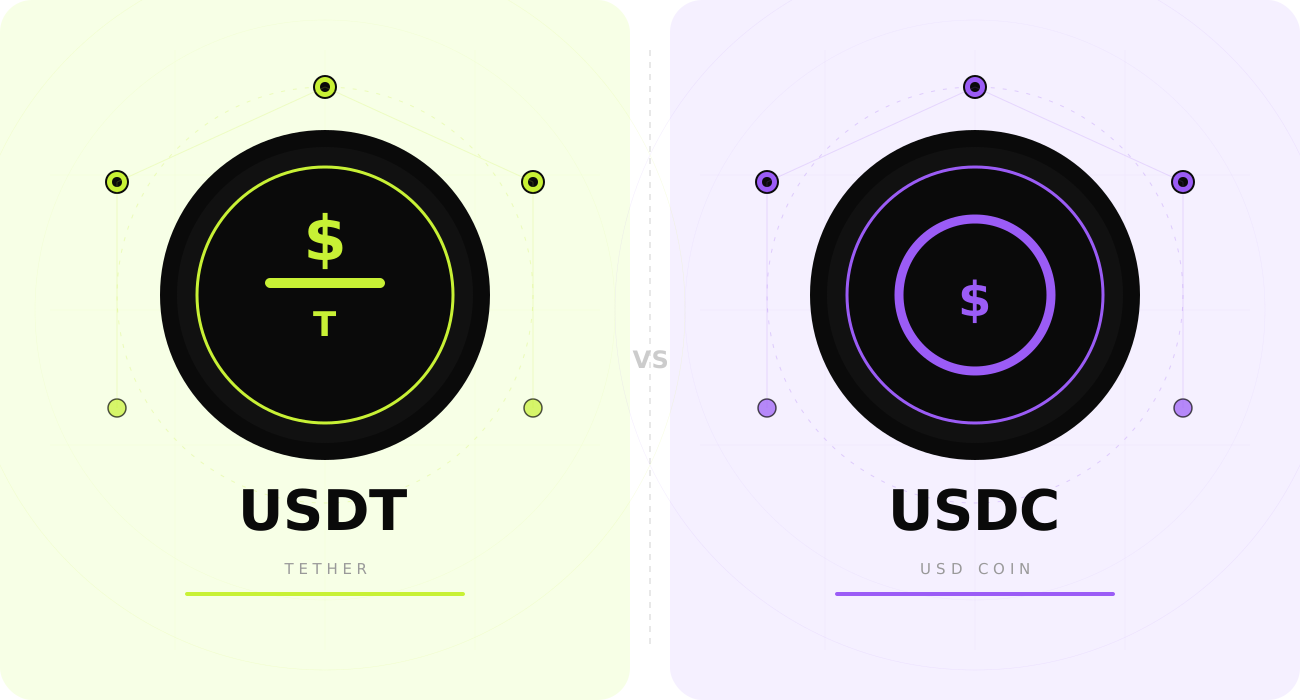
Stablecoins now move trillions of dollars annually — and your choice between USDT and USDC affects not just convenience, but security, cost, and regulatory exposure. The difference between USDT and USDC used to be a niche debate. In 2026, it's a practical decision with real consequences depending on where you live and how you use crypto.
USDT vs USDC at a Glance
Issuer: USDT — Tether Limited / USDC — Circle
Market Cap (2026): USDT ~$145B / USDC ~$60B
Reserves Audit: USDT — quarterly attestations / USDC — monthly independent audits
Regulation: USDT — less regulated / USDC — US-regulated, MiCA-compliant
Networks supported: USDT — 14+ chains / USDC — 16+ chains
Best for: USDT — liquidity, exchanges, emerging markets / USDC — DeFi, regulated markets, transparency
Main risk: USDT — reserve transparency concerns / USDC — banking exposure (2023 SVB depeg)
What Are USDT and USDC?
What is USDT (Tether)?
Tether (USDT) is the world's largest stablecoin with a market cap of over $145 billion, launched in 2014. Pegged to the US dollar at a 1:1 ratio, it runs on 14+ blockchains including Ethereum, Tron, Solana, and Polygon. For a long time USDT was synonymous with the word "stablecoin" — and its liquidity remains unmatched: the highest trading volumes, the most trading pairs, the deepest market.
What is USDC (Circle)?
USD Coin (USDC) is issued by Circle, launched in 2018 as a more transparent alternative to USDT. Also pegged 1:1 to the US dollar, USDC runs on 16+ networks including Ethereum, Solana, Base, Arbitrum, and Polygon. Both tokens are used for trading, transfers, and storing value. At first glance they're twins — but under the hood they work in fundamentally different ways.
Reserves and Transparency: Where the Real Difference Lies
The USDT vs USDC reserves debate is at the heart of every serious comparison. Tether has long faced criticism for avoiding a full independent audit, publishing only quarterly attestations — fundamentally different from a proper audit. According to Tether's own disclosures, around 80% of reserves are held in short-term US Treasury bonds, with the rest in cash and other assets. The tether vs circle audit gap is significant: Circle undergoes monthly independent audits and publishes detailed reserve reports, while Tether's attestations leave room for doubt.
In 2025, Tether made its position clear: rather than adapting to European requirements, the company relocated to El Salvador and pivoted to the US market, where it is developing a new stablecoin called USAT under a federal license.
Is USDC Safer Than USDT?
USDT depeg and censorship risks
Is USDT safe? Tether can technically freeze any USDT address — and has done so at the request of law enforcement. The USDT depeg risk is considered low but not zero: without a full independent audit, the question of whether every token is backed by a real dollar remains open. For users in sanctioned regions or those concerned about censorship, this is a meaningful risk.
USDC depeg history and what 2023 taught us
Is USDC safe? The USDC depeg history offers a cautionary tale. In March 2023, after the collapse of Silicon Valley Bank — where part of Circle's reserves were held — USDC briefly dropped to $0.87. The coin recovered quickly, but the episode exposed a structural vulnerability: even a transparent, audited stablecoin carries banking risk. Paradoxically, MiCA's requirement to hold 30–60% of reserves in bank deposits — the very requirement Circle complies with — could make USDC more exposed to similar situations in the future.
Which Stablecoin to Choose for Your Use Case
For trading on exchanges
The best stablecoin for trading is USDT — unmatched liquidity, the most trading pairs, and the deepest order books on global exchanges make it the default choice for active traders.
For DeFi and yield farming
The best stablecoin for DeFi depends on the network. On Ethereum and Tron — USDT. On Solana, Base, and Arbitrum — USDC increasingly dominates thanks to native protocol support and MiCA-compliant integrations.
For long-term savings
The best stablecoin for savings is USDC. Regular audits, full reserve transparency, and regulatory compliance make it the more defensible choice for users who aren't actively trading and want peace of mind.
For international transfers
The best stablecoin for international transfers: USDT via Tron for small amounts, USDC via Solana or Base for larger ones. Both are significantly cheaper than traditional bank wire transfers — often settling in seconds for a fraction of a dollar.
Regulation: USDT vs USDC in 2026
USDT regulation in the EU has effectively resulted in its removal from the market. MiCA stablecoin rules, which came into full force in December 2024, require issuers to meet strict reserve and transparency standards. Tether never applied for authorization and openly criticized European reserve requirements. The result: Binance, Coinbase, Kraken, Crypto.com, and other major platforms removed USDT for EEA users. Technically USDT isn't banned — you can still hold it in a personal wallet or trade on unregulated platforms — but access through licensed European exchanges is closed.
Is USDC regulated? Yes — Circle obtained a MiCA license from the French regulator ACPR, making USDC the de facto standard for USD-denominated operations in the EU. For users in Ukraine and Europe operating through regulated platforms, the choice has effectively been made for them.
Should You Use USDT or USDC? Final Verdict
Choose USDC if you're based in Europe, prioritize transparency and regulatory compliance, use DeFi on Solana or Base, or are storing larger amounts long-term.
Choose USDT if you trade on global or Asian exchanges, need maximum liquidity and the widest selection of trading pairs, or operate in markets where USDC adoption is lower.
The key lesson of 2025–2026: stablecoins are not neutral instruments. Behind each one stands a company with a different approach to transparency, a different regulatory strategy, and different risks. Whether you use USDT or USDC — or both — understanding the difference is basic financial literacy in the world of crypto.
How Plumex Helps Stablecoin Holders Stay Safe
Plumex supports both USDT and USDC across multiple networks. Automatic address verification, wrong-network warnings, and secure custody infrastructure are built into the platform by default — not add-ons. For EU users, Plumex operates exclusively with MiCA-compliant assets. Whether you're holding USDT, USDC, or both, Plumex helps you protect, manage, and audit your stablecoin holdings in one place.
FAQ
Which is better, USDT or USDC?
It depends on your use case. USDT leads on liquidity and global exchange coverage. USDC leads on transparency, regulatory compliance, and EU accessibility. Most experienced users hold both.
Is USDC safer than USDT?
USDC is more transparent thanks to monthly audits and MiCA licensing. But the 2023 SVB depeg showed it carries banking risk. USDT has stronger liquidity but weaker reserve transparency. Neither is risk-free.
What happens if Tether collapses?
It would be one of the largest shocks in crypto history. At $145 billion in market cap, USDT is systemically significant. Most analysts consider a full collapse unlikely but not impossible — which is why diversification across stablecoins and platforms matters.
Which stablecoin has lower fees?
USDT on Tron (TRC-20) is the cheapest stablecoin to send — from $0.01 per transaction. USDC on Solana or Base offers comparable fees with broader DeFi compatibility.
Can I recover lost or sent-to-wrong-address USDT/USDC?
In most cases, on-chain transactions are irreversible. However, if the transfer involved a known centralized exchange or was made through Plumex — contact support immediately. In some cases partial recovery is possible, but speed is critical.
Final Thoughts
USDT vs USDC is not just a technical comparison — it's a question of priorities. Liquidity vs transparency. Global reach vs regulatory compliance. In 2026, for most users in Europe and Ukraine, the answer tilts toward USDC. But knowing the strengths and weaknesses of both remains essential for anyone navigating the world of stablecoins.